

Same Job. Different Expectations.
It's been a big week for Aussie tech and retail.
Canva announcing a restructure affecting more than 1,200 roles, Heidi Health reportedly cutting around 100 jobs, and on Melbourne Cup Day, the RBA lifted rates again to 4.85%, the highest since 2008.
David Jones has gone into voluntary administration, and Microsoft has offered voluntary buyouts to around 60,000 employees.
Combine that with what feels like one of the toughest technology markets we've seen in a long time, and it's pretty confronting.
Where things go from here with AI is still an open question.
Which brings me to upskilling.
If you're in a role today, what does staying valuable actually look like when the expectations around that role are changing?
I've been talking to technology leaders about this recently. A few things have stood out.
It's not just AI. It's the maths.
AI gets a lot of the blame for what's happening to technology teams.
But I reckon we're overlooking the economics.
Businesses hired heavily when money was cheaper. Now there's pressure to show a return on that investment.
NAB has announced plans to cut up to 2,500 internal roles and reduce its reliance on contractors and consultants.
Meta's latest results showed headcount down 15% year on year while revenue grew 26%.
Different businesses, different circumstances. But you can see why boards are asking harder questions about workforce costs.
One CIO recently told me that around 68 cents of every dollar at his organisation goes towards people. At a competitor, it's closer to 33 cents.
They're not necessarily like-for-like businesses, but you can imagine the questions that creates.
Can we get more from the teams we've already got?
Team of five. Team of one.
I placed an architect into a bank a while back.
In her previous role, she was one of five architects, with a product owner, application support team and ticketing process around her.
In her new role, she's the only architect.
If she needs an answer, she's getting into the Java codebase and finding it herself.
Same profession. Very different expectations.
And that's what I find interesting about the upskilling conversation.
It's not always about another language or certification.
Sometimes it's about taking on broader responsibility and solving problems that previously involved several people.
The job title hasn't changed. The job itself has.
The thinking around the code.
I had an interesting conversation with a senior technology leader recently about what they're looking for from engineers and testers.
One thing stuck out.
As AI changes how software gets built, they're thinking more about the work that happens around the code.
Defining the business problem properly. Challenging whether it's the right problem. Writing clear specifications. And putting the checks in place to know whether the output is actually right, regardless of who or what produced it.
That doesn't make technical depth less important.
But it raises an interesting question about where people spend their time and what makes their contribution valuable.
The same leader also talked about communication. Sharing what's working, what isn't and what the wider team can learn.
None of this is particularly new. Good engineers have always done these things.
What seems to be changing is how much weight businesses are putting on them.
And perhaps that's a more useful way to think about upskilling than simply asking which new tool everyone should learn next.
Who's actually responsible?
There's plenty of advice telling people in technology to upskill.
Learn AI. Get certified. Stay relevant.
And of course individuals have a part to play.
But something else came out of that conversation with the technology leader.
Their business is actively trying to develop deeper, industry-specific technical capability in-house, rather than letting critical knowledge sit with external providers.
That's a different conversation from telling employees to do a course in their spare time.
And there are some interesting examples elsewhere.
CBA has committed around $90 million over three years to a workforce skills programme. It's also mapping employees' existing skills to potential roles across the bank, with a focus on helping people develop and move internally.
That doesn't mean every business can spend $90 million.
But it does make me wonder whether we're talking enough about the employer's side of upskilling.
Are people getting opportunities to work on broader problems?
Are teams sharing what they're learning?
And when businesses invest in training, are people actually getting the chance to use those skills?
If organisations increasingly need engineers who can do more, how much responsibility do they have for helping their existing teams get there?
Because developing that capability internally might be a lot more valuable than having to go out and buy it later.
What does upskilling actually look like in your business?
I'm interested in what technology leaders are doing that's genuinely working.
Not just training budgets or certifications. Actual changes in what people can do and how their roles are evolving.
Hit reply. I'd love to hear your take.

Thinking about how your technology team needs to evolve over the next 12 months?
We're always happy to compare notes on what we're seeing across the market.
Get in touch with Nick, Sam, Basil or Joe.

Nick Shepherd
Founder

Sam Lawson
tekFinder

Basil Benoiton
tekFinder

 tekFoundation / November Update
Less screen time. More time together.
6.4% of tekFinder's placement fees support small charities through tekFoundation's skilled volunteering services. And the work is about more than funding. It's also about getting people in a room to share what they know.
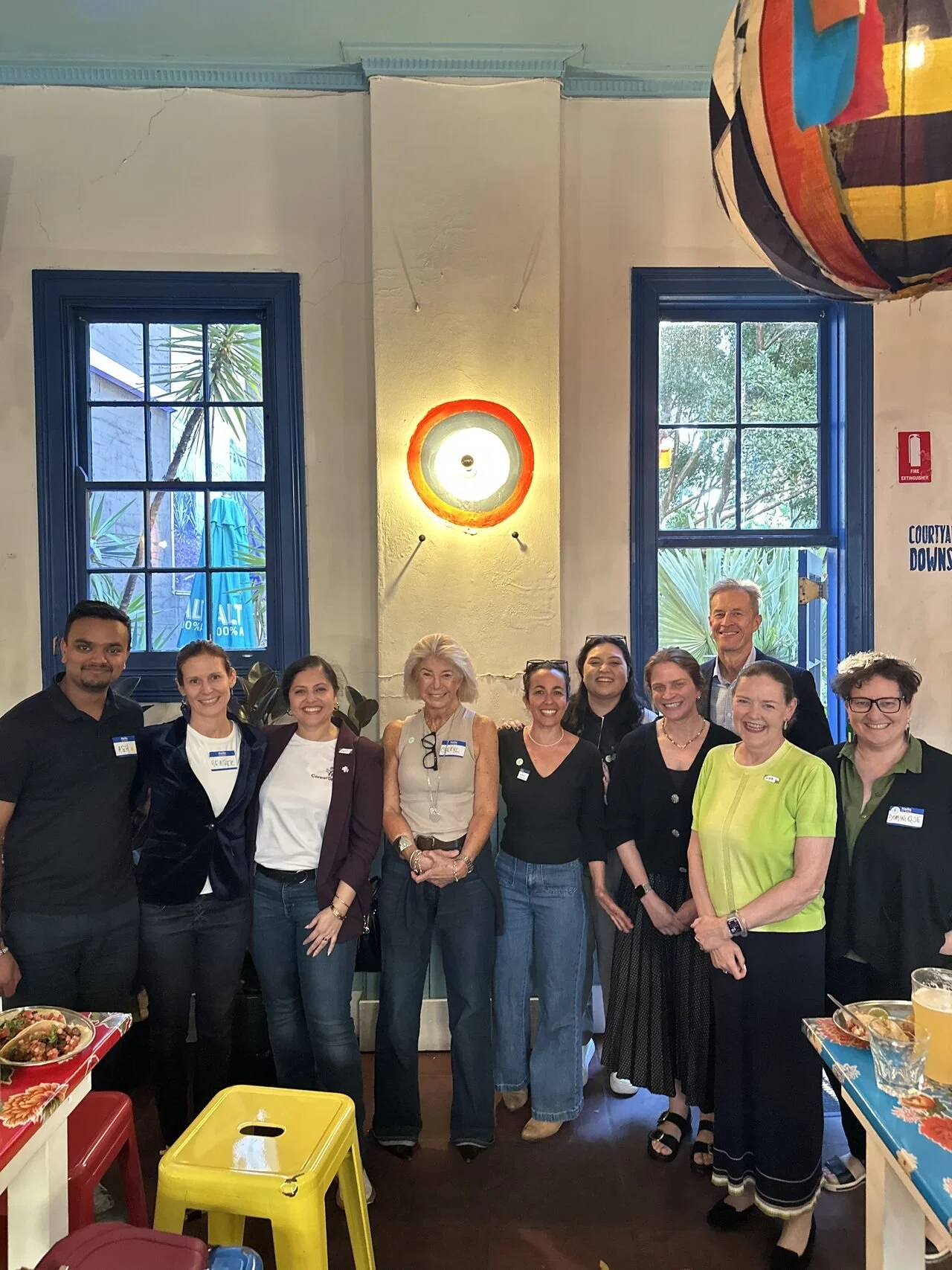
Joni Fleischer says getting a group of strangers together for tekFoundation happy hours is becoming one of her favourite parts of the month. People often arrive on their own, but familiar faces are starting to return.
At the latest gathering, conversations turned to CareerSeekers and employment pathways through volunteering, alongside fresh ways existing data strategies could support Success Works Partners.
It's a good reminder that useful solutions often start with people spending less time on devices and more time connecting with one another.
Thanks to Cheryl Sing, Heather Opdam and The Laptop Initiative for co-hosting.
Come along to the final tekFoundation gathering of 2026
Tuesday 1 December · Central Sydney
Location to be announced. Join the last get-together of the year.
RSVP for 1 December →Missed one?
Every edition of State of Play is in one place. What we were hearing, what moved on pay, and what we got wrong. Worth a look if you want to see how quickly some of this has changed.